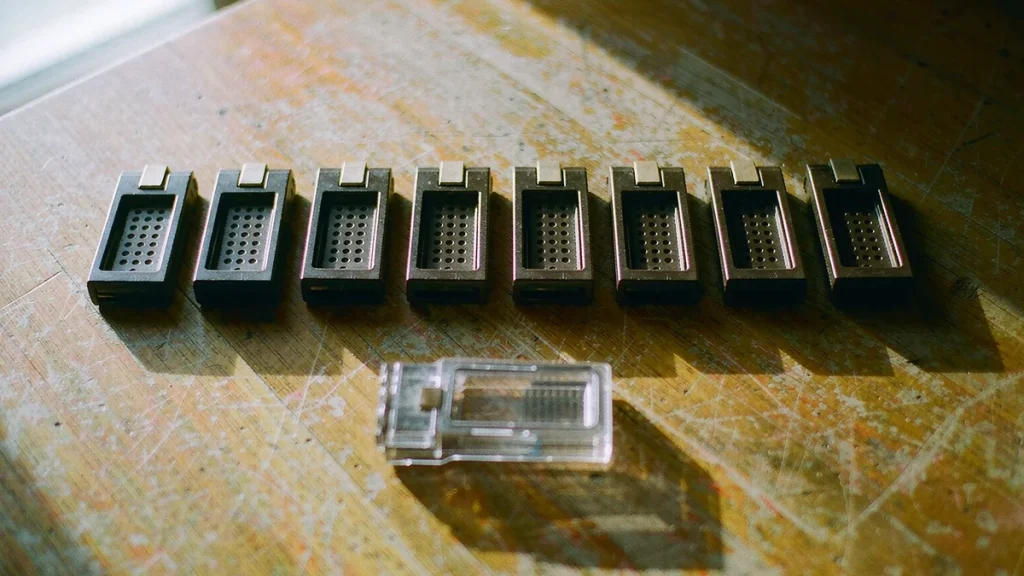
Every Switch 2 game card depends on a chip that one company just stopped making. Not paused. Stopped.
Macronix made the read-only memory inside Switch and Switch 2 game cards. On November 4, MST Financial analyst David Gibson reported that the Taiwanese firm is leaving that business entirely, as Gizmodo first covered. ROM storage fell to 5% of Macronix revenue last quarter. A year earlier it was 26%. The third quarter will be the last one where the company even reports ROM sales on their own line.
This is not a pricing story. It is a supplier walking away from a product that stopped paying. The bill arrives on retail shelves over the next two years.
What is actually inside a game card
A Switch 2 game card is not a tiny hard drive. It is silicon with the game burned into it during manufacture. You cannot write to it. You cannot patch it in place.
That sounds like a limitation. It is the point.
Why Nintendo never used flash
Flash memory rewrites, which sounds strictly better. It is also slower to read at the sizes a modern game needs. And it costs more per gigabyte at low capacity.
Mask ROM is cheap in volume. It reads fast. It keeps data without power, for decades. For a cartridge that holds the same code for twenty years, permanence is the feature, not the compromise.
The cost is industrial. Mask ROM needs a factory tooled to make it. That is a different line from the NAND and eMMC that data centres buy by the tonne. When one fab can earn more making server memory, the game card line is the line that closes.
Five percent explains everything
Macronix did not leave because Nintendo treated it badly. It left because the arithmetic stopped working.
- ROM share of revenue: 26% a year ago, 5% today.
- What still uses it: Switch and Switch 2 game cards.
- What the capacity can make instead: NOR flash and eMMC for data centres.
- Announced end: ROM output stops by the close of the 2026 fiscal third quarter.
A unit going from a quarter of revenue to a twentieth in twelve months is not a slow fade. It is a decision already taken, reported after the fact.
Macronix was not the only supplier. ROHM makes comparable parts. Nintendo has bought from both for years. So no shelf goes empty next week.
But supplier count is not a footnote. Two suppliers can absorb a shock. One supplier is a single point of failure. And the price of a part with one source is whatever that source decides it is.
There is a recent precedent for how this ends. Micron left consumer memory entirely about a year ago and shut down its Crucial brand. The pattern is the same. Industrial demand outbids retail demand, and retail gets the leftovers.
What Nintendo can and cannot promise
Nintendo says it is not leaving physical media. Bill van Zyll, a general manager at the company, confirmed there are no plans to drop physical sales. That came in response to Sony’s decision to stop producing discs in 2028.
Read the statement carefully. It is about intent. It says nothing about supply.
Wanting to sell game cards and being able to source them at a workable price are different problems. Nintendo can mean every word and still ship fewer physical titles. The constraint sits upstream of the decision.
And the market it is defending keeps shrinking without help. Digital took 61.5% of Nintendo software sales between April and June this year. In the same period of 2025 it was 41.6%. That is twenty points in twelve months, before any supplier left.
The contrast with Sony is worth stating plainly. Sony chose to end disc production in 2028. That is a strategy decision, announced in advance, with years of runway. Nintendo is being pushed toward the same outcome by a supplier it does not control, on a timeline it did not pick, with a public commitment to the format still standing.
One company is walking away from physical media on purpose. The other is watching its supply chain walk away first and insisting nothing has changed. Both may end up in the same place. Only one of them chose it.
So the company is holding a commitment to a format its own customers are abandoning. The Macronix exit did not start that trend. It speeds it up. And it raises the cost of keeping the promise at the same moment.
The ten dollars already on the sticker
Physical Switch 2 games already cost more than downloads. The gap is not a rounding error.
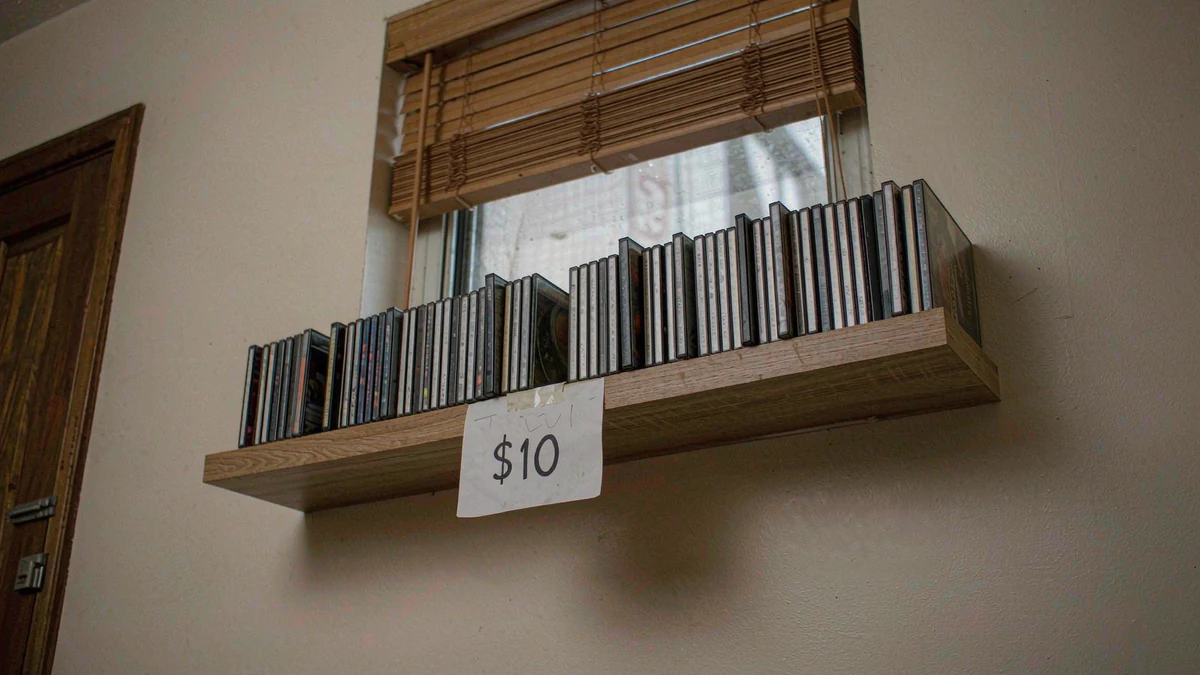
Nintendo began charging a $10 premium for physical cards this year. Fire Emblem: Fortunes Weave is $70 digital. The same game is $80 on a card.
That is 14% for a box, a piece of plastic, and the right to resell. It is also an honest price. A card contains a chip. A download contains nothing. When the chip gets scarce, the premium has to grow, because the component is the part that got expensive.
Watch that $10. If it holds, Nintendo is eating the difference. If it widens, the physical buyer is paying for a supply chain that is quietly contracting. Either way, the argument for buying physical gets harder to make on price.
Why big games get hit first
Game cards top out at 64GB. That ceiling is a hardware fact, not a policy. Anything that needs more space than that cannot fit on a single card at all, whatever the supplier situation.
Below the ceiling, cost scales with capacity. A 64GB card uses more of the expensive component than an 8GB card, which is why the largest releases are the ones most exposed to a ROM price change and the least able to absorb it quietly.
That splits the market in a way worth understanding. A small independent game with modest file sizes can stay on a full card and barely notice. A large AAA release either ships on multiple cards, eats the margin, or moves to a key card and hands the download to the buyer.
Watch which publishers move first. It will not be the ones with small games. It will be the ones whose install sizes are large enough that the difference between a card and a key card shows up as real money on a spreadsheet, and those are usually the releases people most want to own physically.
Game-key cards solve the wrong problem
A middle format already exists. It fixes the supplier issue by removing the thing people wanted.
A game-key card holds a licence and almost no game data. You insert it. The console checks that you own the title. Then it downloads the game from Nintendo’s servers.
The card is physical. The game is not.
Its one real advantage is resale. You can hand the card to another person. You cannot do that with a download locked to an account. But that advantage depends on Nintendo’s servers staying online, because the card holds nothing playable on its own.
Most third-party publishers already moved to key cards, since a key card costs a fraction of a full ROM card to produce.
The arithmetic is bleak and simple. A key card costs less to make, ships in the same box, and sells at the same price. Every incentive points one way, and none of them point toward keeping the game on the card.
A few large releases still ship the whole game on the card. Titles like The Elder Scrolls V: Oblivion Remastered and Indiana Jones and the Great Circle sold out fast at launch. That tells you how much demand remains for real physical games.
With the main ROM supplier gone, the incentive to use key cards gets stronger for everyone involved. The format that survives may be physical in shape and digital in substance.
Three kinds of ownership, one of which is real
People use “owning a game” to mean three different things. They get conflated constantly, and this is the moment to separate them.
A full game card works forever. No server, no account, no network. Put it in a console in 2040 and it plays.
A game-key card works while Nintendo runs the download service. When that service ends, the card is a licence to nothing.
A digital purchase works while your account exists and the store lists the title. Delisting is rare, but it happens, and it happens to licensed music and third-party titles more than to Nintendo’s own.
Only the first one is ownership in the ordinary sense. Supply pressure hits that category and pushes everyone toward the other two. That is why a 5% revenue line matters more than its size suggests. It is not removing games. It is removing the version of a game that never needed permission to keep working.
What resale is really pricing
A used game card and a used game-key card look identical in a listing photo. They are not the same asset, and buyers are slowly figuring that out.
A used full card carries the game. Whoever buys it can play offline on day one, on any console that accepts the card, with no account involved beyond the console itself. Its resale value tracks the game’s reputation, which is why out-of-print physical releases climb in price while digital copies of the same title sit at full retail forever.
A used key card carries a licence and nothing else. The buyer still needs the download, still needs the space, and still needs Nintendo’s servers to be running. Its resale value tracks the price of the game minus whatever hassle the buyer assigns to re-downloading it, which is a much weaker floor than a disc or a cartridge has ever had.
That difference is invisible until the store closes. Then it becomes the only thing that matters, because one of those two objects still works and the other one is a piece of plastic with a serial number on it.
What to watch next
Three signals will settle this faster than any statement.
First, whether Nintendo announces a replacement ROM supplier. ROHM is the obvious candidate. A quiet volume commitment would mean the format survives at a higher cost. Silence for a year means it does not.
Second, the physical share in Nintendo’s next two quarterly reports. Digital passed 60% this year. If it clears 70% while physical supply is constrained, the format is being retired by demand, and the supplier exit becomes a footnote.
Third, the price of a full game card release. A widening gap between the card and the download is the clearest signal that the premium is carrying the supply chain rather than the box.
Nintendo will keep selling something in a case. The question is what is inside it by 2028, and whether the extra ten dollars still buys a game or only a permission slip.