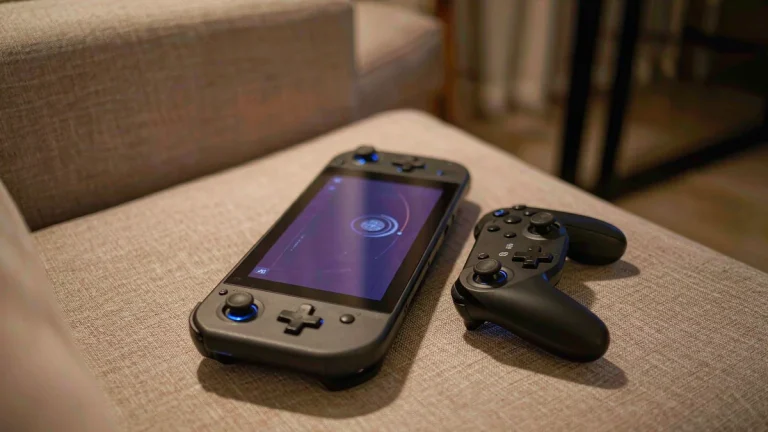
I went looking for a clean way to move a Nintendo account between regions with money still sitting in it. There isn’t one. But the reason is narrower than most guides suggest.
Two separate limits get tangled together in almost every eShop maximum balance explainer I read. One is how much money an account can hold. The other is what happens when you change countries. They follow different rules. Only one has an escape hatch.
The ceiling is real, and it resets daily
Nintendo caps the total eShop balance per account, and the cap is set per country rather than globally. Hit it and you get error 2813-5509, which reads “You have reached the maximum allowed balance.”
The same number governs how much you can add in a rolling 24-hour window. So the ceiling is not just a storage limit. It is also a deposit limit, which matters if you were planning to top up once and buy several things later.
| Region | Maximum balance |
|---|---|
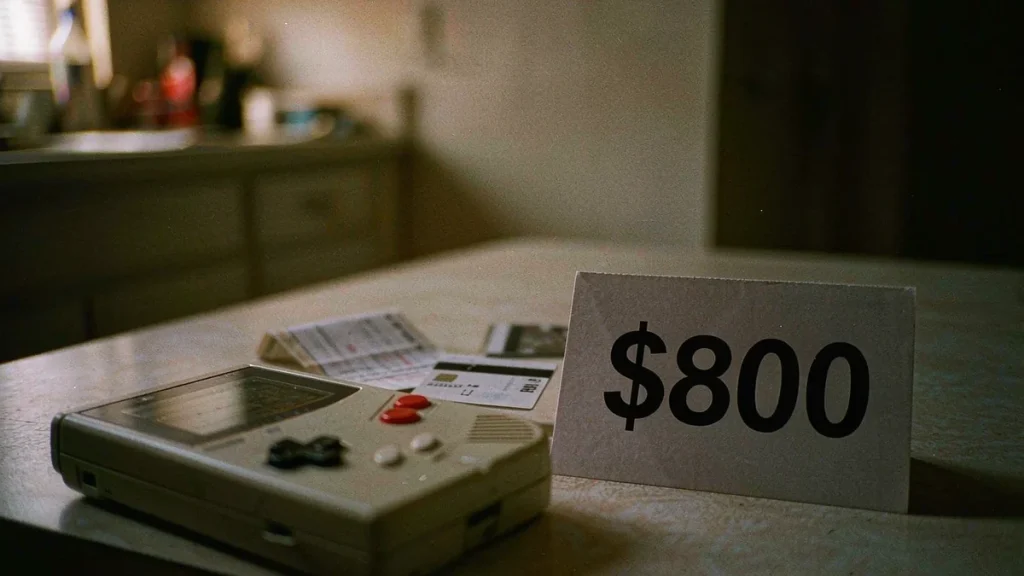
| United States | $800 USD |
| Canada | $1,100 CAD |
| Mexico | $5,000 MXN |
| Argentina | $260,000 ARS |
| Brazil | R$1,500 BRL |
| Chile | $250,000 CLP |
| Colombia | $1,200,000 COP |
| Peru | S/1,000 PEN |
The European figures are published separately and are lower in absolute terms. The euro ceiling is €400. The pound ceiling is £340. The franc ceiling is 400.
Nordic and central European accounts get their own numbers: 4,400 SEK, 4,600 NOK, 3,000 DKK, 1,700 PLN, 10,000 CZK, and 8,200 ZAR.
Notice what this is not. It is not a spending limit. It is not a refund threshold, either. It is a hard cap on stored value, and Nintendo enforces it at the moment you try to add money rather than at the moment you try to spend it.
Money in the account blocks the move
Nintendo eShop always matches the country on your Nintendo Account. Change the country. The console opens that store the next time you connect.
But the balance does not travel. Nintendo states that eShop funds do not carry over when you change the country setting, and that you have to use the remaining funds before the change will go through.
The practical version is worse than the policy version. A balance of a few cents is enough to stop the change, and the only sanctioned way to clear it is to spend it on something.
And that turns a simple setting into a forced purchase. If you have $37.42 sitting in a US account, you are now shopping for a $37.42 solution rather than for a game you wanted.
You can check the exact figure before you commit. Sign in at accounts.nintendo.com and open Funds and Payment Methods. The balance shown there is the number that decides whether the change is allowed.
Do that first, because the console does not always show the same total. Family group members can hold separate balances, and the blocker applies to the whole group rather than to the profile you happen to be holding.
Contacting Nintendo of America support is the documented fallback when the remaining funds are too small to spend on anything. It is not a fast path. It exists because the dead-end is common.
Two regions, two different rules
This is the detail that almost no summary mentions, and it changes what you can do depending on where the account is registered.
Accounts in Australia or New Zealand can move with a balance intact. The system warns that the funds will be lost. The owner confirms to proceed. The money is gone, but the move happens in one step.
Accounts set to an American region cannot do this. The error message is explicit about it: the country cannot be changed until the remaining funds are used up. There is no confirmation screen, because there is nothing to confirm.
Nintendo of America’s own article on the error says the same thing twice, in slightly different words, which tells you how often it gets asked.
So the answer to “can I just abandon the balance and switch” is: yes in Australia and New Zealand, no in the Americas. Same account system, same store software, different outcome by registration country.
Three more things that block the switch
Balance is the most common blocker, not the only one. Three more conditions stop a country change cold.
- An active automatic renewal on Nintendo Switch Online, the Pokémon HOME Premium plan, or an in-game pass.
- An outstanding pre-order for downloadable content that has not released yet.
- Child accounts in a family group, which follow the admin’s country and cannot be changed on their own.
This catches subscribers who never had a balance problem. A $3.99 auto-renewal blocks it as hard as $700 does.
A child account is anyone aged 15 or under in the family group. Those accounts cannot change country on their own, at any point, for any reason.
The child account rule runs the other way. A parent changing country takes every child account in the family group with them, whether or not those children have their own balances. If one of them does, the parent inherits the same blocker.
Nintendo’s guidance for a stuck change is to cancel the auto-renewals, cancel the pre-orders, and spend the balance. All three in that order, because cancelling a renewal can free up funds you then need to spend down.
Payment methods do not travel either
Even with an empty balance and no subscriptions, the money you use to refill has a country attached to it.
Your card will not work in another region’s eShop. A US-issued card works in the North American store. It does not work in the Japanese one.
That is the second wall. It arrives right after you clear the first. You move the account. Then the only card you own declines at checkout.
This is where regional eShop cards and PayPal earn their place. Neither removes the balance ceiling, and neither makes the balance transferable. They just give you a way to pay in a store your bank has never heard of.
My read is that the whole design is coherent once you see it as one decision rather than three bugs. Nintendo prices software per country. Stored value belongs to that country’s store. Letting balances float would turn currency gaps into arbitrage.
What I would actually do
If you are staying in one region, none of this matters. Buy what you want. Keep the balance small. The $800 ceiling is trivia.
If you are planning a move, work backwards. Cancel the auto-renewals first, because that is free and reversible. Then look at the balance and decide whether you are willing to convert it into games you were going to buy anyway.
Do not buy filler to reach zero. Spending $37 you did not plan to spend in order to unlock a region change is a bad trade unless the region change is worth more than $37 to you, which it usually is not.
One case clearly pays off: a permanent relocation. If you are moving to Japan and staying, clearing a small US balance on a game you will play anyway is rational. Testing a region for a single purchase is not one.
I am still unsure why Australia got a confirmation screen. The most plausible explanation is a regulatory difference in how stored value has to be handled, but Nintendo has not said so, and I would not treat that as fact.