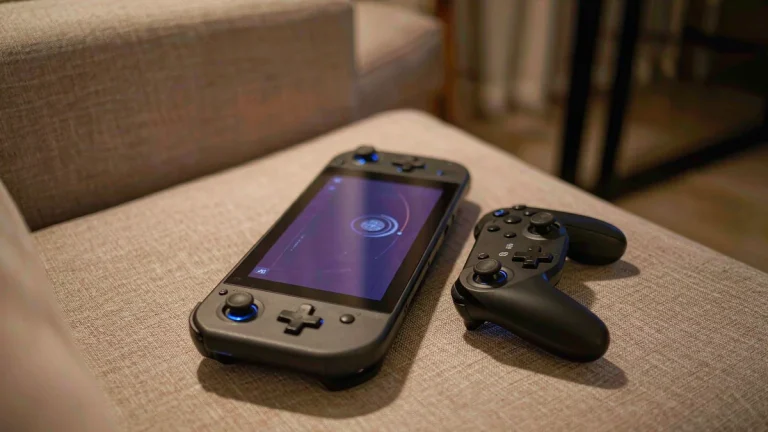
The card in the box is real. The game is not on it. Nintendo’s game-key cards look like the cartridges that have shipped with every handheld since the 1980s, but they contain a licence and a small bootstrap rather than a playable build. A warning aimed at physical-game collectors this week was not nostalgia. It was a description of what changes when the object stops being the copy.
That distinction stays invisible until someone tries to sell the thing.
What is physically on the card
A conventional cartridge holds the game data. Insert it, and the console reads from it. A game-key card holds an identifier that authorises a download, plus whatever small payload is needed to start that process. The bulk of the software arrives over a connection and lives on internal storage or a memory card.
The card does not become an empty souvenir afterwards. It remains the key: the console checks for its presence each time the software starts. Lose the card and the downloaded data is unusable. Keep the card and the data can be deleted and fetched again, at least while the download service remains available.
That is a genuinely different ownership shape. The licence is physical and portable; the bits are not. It is closer to a code in a box than to a cartridge, with the practical difference that the code cannot be copied into a note and filed away.
The first-run download is the real purchase
Anyone buying the card is also buying a download they have not made yet. That matters in three ordinary situations, none of them exotic.
- A console with no working network connection at setup time cannot complete the first launch.
- A household with limited storage has to make room before an unopened game will run.
- A gift opened somewhere with slow or metered connectivity turns into a waiting exercise rather than an afternoon.
None of these appear on the back of the box, because the box was designed for a product category where inserting the object was the whole transaction. The friction is small, but it is new, and it is the kind of thing a second-hand buyer has no way to inspect from a photograph of a cartridge.
The cartridge was a copy. The key card is permission.
There is a supply-side context worth one sentence. Reporting this week also covered the main supplier of Switch cartridges stepping away from the ROM business. Whether or not that decision caused any particular publisher’s choice, it makes the economics of pressing full data onto a card less predictable than they were a year ago.
Resale, lending and the account question
Here is the part that usually gets misunderstood: a game-key card is generally not tied to a person’s account. The licence travels with the card. Lending it to a friend works much like lending a cartridge, and a used sale transfers the ability to authorise the download to the new holder.
What does not transfer cleanly is certainty. A buyer cannot tell from the object whether the title has ever been redeemed somewhere, whether the original purchaser kept a copy of any included code, or whether the storefront still serves the download in their region. Those are questions about a service, and a plastic card has no way to answer them.
Save data is a separate matter. Saves live on the console or on a cloud service tied to an account, not on a game-key card. Selling the card does not wipe the seller’s save, and buying one does not bring anyone else’s progress with it. Collectors who assume a cartridge carries its history are working from a model that no longer applies.
What happens when a storefront closes
The long-term question is availability. A full cartridge keeps working as long as the console does. A key card keeps working as long as the download can still be served, or as long as the data remains on the machine that already fetched it.
Consoles have a decent record here: download servers tend to outlive the commercial life of a storefront by years, and re-download of already-entitled content usually survives a shop closing. But “usually” is not a guarantee, and it is not a property of the object in your hand. For anyone building a shelf meant to outlast a platform generation, that is the whole concern.
The practical mitigation is unglamorous. Keep the downloaded data on a console that stays functional, keep the card, and do not assume a listing that says “physical” means the same thing it meant a decade ago.
How to check before buying a used copy
Start with the packaging. Publishers that use key cards generally say so on the box, often in small print near the back. If the listing shows only a loose card and no case, the wording is gone, and the product code is the only thing left to look up.
Then check the title’s storefront page in the buyer’s own region while the transaction is still reversible. A listing that is still live and still offers a download is the single most useful signal available. Ask the seller whether any included add-on codes were separate, since those are one-use and frequently the reason a used bundle disappoints.
Finally, decide what is actually being collected. If the goal is a working library, a key card is a perfectly functional way to own a game. If the goal is an object that will still boot without asking anyone’s permission, it is a different product from the one on the shelf next to it.
Nintendo’s own store listings are the place to confirm how a given title is delivered, and the company’s support documentation covers redownload and storage behaviour. Both change more often than the packaging does, which is the point.