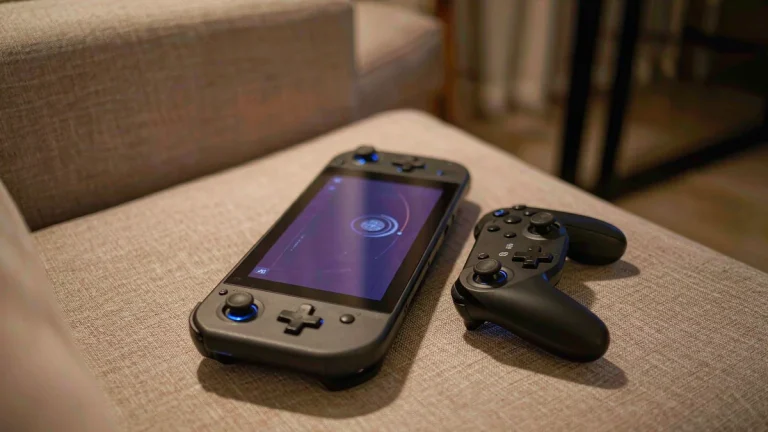
Nintendo put a date on it: January 26, 2027, 3 p.m. in Taipei, which is 1 a.m. in New York. After that, the Nintendo Account login page stops accepting a Google or Apple sign-in.
The notice went up on November 10, in Japanese and Traditional Chinese first. It is short, and it answers almost nothing about why.
What actually changes
Three things stop working. Signing in with a Google or Apple account. Creating a new Nintendo Account with one. And the My Nintendo mission that paid platinum points for linking a Google account.
Nintendo also says there will be no other third-party login. So the list of ways in shrinks to two: a Nintendo Account email address or login ID with a password, and a passkey tied to your phone.
Anything already signed in on a console or the Switch app may keep working without a new login. The trouble starts at the next sign-in prompt, which is exactly when you will not have the password.
What to do before January
Two minutes of work now saves a support ticket later. Open the Nintendo Account login page, try the password reset flow, and see whether a message actually reaches you.
The email address is the weak point
Password resets go to the address registered on the account. If that address is a university mailbox you lost, or an old carrier address, the reset goes nowhere.
Nintendo’s own guidance for that case is a contact form, because the address cannot be changed from the account page. That is a manual review, and manual reviews take days.
So the first check is not the password. It is whether the email on file still belongs to you.
The passkey route
Nintendo offers passkeys as the modern alternative. They live in your phone’s biometrics, and they cannot be phished or guessed.
They also cannot be recovered if the phone is gone and no backup exists. Set one up, but keep the password working as well. One method is a single point of failure.
Why Nintendo would do this
Nintendo has not said. The notice contains no reason at all, which is unusual even for a company that writes terse notices.
The plausible answer is control. A login delegated to Google or Apple means the identity check happens on someone else’s servers, under someone else’s rules, and Nintendo cannot see the failure modes.
There is also an accounting answer. A Google-linked account generates a My Nintendo mission, and that mission costs platinum points. Cutting the link ends the payout.
And there is a support answer. Accounts that authenticate through a third party are hard to recover when the third party locks the user out. Nintendo inherited those cases without owning the fix.
What it costs them
Friction, and some goodwill. One-tap login is the reason a lot of people made an account in the first place, especially parents setting up a child’s console on a phone.
Sony and Microsoft have kept their third-party logins, which makes Nintendo the outlier. That is a real difference in posture, and it is worth noting that neither rival has announced a similar deadline.
I do not think this is a prelude to something larger. It reads like an account-security cleanup with a hard date attached, and the passkey option is the tell: a company planning to lock people out does not hand them a better key.
Who gets stuck
Three groups, in rough order of trouble. People whose registered email is dead. People who never set a Nintendo password because the Google button did it for them. And households where one adult set up several children’s accounts under one Google login.
The third group is the one Nintendo’s notice does not address. A parent who created three supervised accounts through their own Google sign-in has three accounts to move, and one email address to do it with.
Supervised accounts cannot do much on their own, so the parent has to run the reset for each one. That is not hard. It is just tedious, and it is the kind of thing that gets postponed until the deadline.
If you are in that position, do it in one sitting. Write down which account belongs to which child, reset all of them, and test one sign-in on each console before you call it done.
Where the deadline actually bites
January 26 is a Tuesday. The account prompt will appear on a device that has been signed in for months, on a day when nobody planned to deal with it.
That is how these migrations fail. Not at the deadline, but three weeks later, when a console asks for a password nobody has and the reset lands in an inbox nobody reads.
Nintendo’s notice suggests exactly that fix and stops there. Change the password, keep the email current, add a passkey. It is a short list and it is entirely on the user.
For a company that spent the last year selling a console to families, handing every one of them an account chore with a two-month window is a strange way to start a year. The connectivity desk keeps the rest of these account and region problems, including the eShop balance that will not follow you across regions.